Bad Bad Love Lyrics – Alexander
Soundtrack Album: 10 Years
It was all colors and heat
And rain falling in the streets
And bad, bad love
When she asked, "Oh, what do you need?"
I said, "What do you believe?
I need bad, bad love"
How can I care anymore?
Bring me a love
A bad, bad love
Right now
A bad love, oh
I went marching though the mall today
Singing bad, bad love
I went marching through the ghetto today
Singing bad, bad love
She asked, "What is it you need?"
A love the devil can't reach
I need a bad, bad love
Our scriptures turned to sand
Our boy become a man
With a bad, bad love
Fill me with love
A bad, bad love
Bad, bad love
Right now, yeah
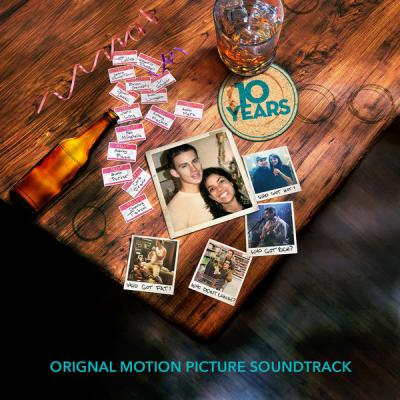
10 Years
Soundtrack Lyrics for Movie, 2012
Track Listing
Oscar Isaac
Alexander
Bibio
Willie Wright
Bushwalla
Rogue Wave
Joe Purdy
Oscar Isaac
Chad Fischer
Willie Wright
The Pharcyde
Song Overview
Review and Highlights
Quick summary
- A mid-tempo cut from Alex Ebert’s 2011 solo album Alexander, tracking desire and damage in the same breath.
- Built on hand-played groove, Pops Staples-style guitar licks, and stacked one-man harmonies that feel communal yet intimate.
- Placed in the opening stretch of the 2011 film Fright Night, which helped the track reach a wider audience beyond Ebert’s core fans.
- Not released as a stand-alone single; lives as a mood-setting album deep-cut that became a soundtrack sleeper.
- Tempo sits around the walking pace mark, with a singable, call-and-response hook centered on the phrase “bad, bad love.”
Creation History
Alex Ebert recorded Alexander largely as a one-man operation, playing most of the instruments and shaping the record’s lo-fi, folk-soul varnish. The album arrived in early March 2011, a sidestep from his large-ensemble persona with Edward Sharpe and the Magnetic Zeros. “Bad Bad Love” reflects that DIY intimacy: guitars dry and close, percussion that sounds more living room than live room, and a chorus that expands from a single voice to a kitchen-table choir. Critics at the time flagged the song’s blend of gospel inflections and a Dylan-tinged delivery, noting how Ebert’s vocal affect rides atop a lattice of tremolo guitar and unvarnished harmony stacks - a small song that feels like a street procession.
The video that circulates online isn’t a blockbuster narrative clip so much as an image-driven companion: performance-adjacent, letting the track’s mantra do the heavy lifting. That restraint suits the material. Ebert leans into repetition, letting the phrase “bad, bad love” behave like a drumbeat for a messy heart.
Highlights in the arrangement
- Call-and-response hook: The chorus functions like a field chant. Repetition isn’t laziness here - it is design, giving the audience something to latch onto in two listens flat.
- Gospel tint, secular scene: The song flirts with the cadence of revival music without becoming a sermon. Tambour, claps, and stacked voices evoke a storefront church, yet the lyric walks the mall and the ghetto, not the nave.
- Guitar character: Warm, slightly overdriven pulses recall Pops Staples and other roots players who favored feel over flash. It’s a pocket that invites sway more than stomp.
- Lo-fi polish: The mix is deliberately homespun - audible fingers on strings, a hint of room bloom. It folds the listener into the room rather than placing them behind the glass.
Song Meaning and Annotations
Plot
The lyric sketches a day-in-the-life pilgrimage where desire refuses to stay tidy. The narrator wanders through everyday spaces - a mall, a neighborhood under strain - and invokes a love he calls “bad.” Not wicked in a cartoon sense, but risky, disruptive, the kind you chase even as it reshapes your better judgment. By the final stretch, “our scriptures turned to sand / our boy become a man,” the pilgrimage hardens into rite-of-passage: learning requires some burn; growing up often happens off the syllabus.
Song Meaning
“Bad Bad Love” treats longing like a force that doesn’t care for respectability. The narrator wants a love “the devil can’t reach,” which reads as a paradox: a desire so pure that even temptation can’t touch it, yet it still feels wild enough to be “bad.” That friction - sacred aspiration meeting unruly appetite - animates the song. The mood is lean and earthy, the kind of groove you could build with a chair for a drum and two voices in a stairwell. The context matters too: Ebert had stepped away from the euphoric caravan sound of his main band to explore something smaller, more interior. The track wears that change like a comfortable shirt.
Annotations
“It was all colors and heat / And rain falling in the streets”
This opening turns the city into a weather map of feeling. “Colors and heat” signals sensory overload; rain in the streets places the scene at ground level, not some dream loft. It is love understood as climate, not merely plot point.
“She asked, ‘What do you need,’ / I said ‘What do you believe’”
A neat misdirection: answering need with belief reframes the conversation. The narrator is not bargaining for comfort; he is asking for faith - the precondition for any love worth the trouble. The exchange hints at a ritual, a catechism rewritten for two.
“A love the devil can’t reach”
That image pulls the song toward folk and gospel traditions where the devil is less cartoon and more metaphor for erosion - addiction, cynicism, despair. Wanting a love beyond reach of that erosion is both romantic and moral.
“Our scriptures turned to sand / Our boy become a man”
Scriptures turned to sand suggests dogma dissolving under lived experience. The second line carries real weight: it’s the archetype of coming-of-age by fire. Traditions crumble; a person steps forward, changed and a little scorched.
Genre and rhythm
At heart it’s a folk-soul hybrid. The backbeat is easygoing, sitting at a walking cadence that makes the chant-like chorus feel communal. Guitar tones draw from roots gospel and country-soul, while the vocal delivery nods to mid-60s rock storytellers, sanded by a modern bedroom-recording edge. As one critic put it at the time, the song “swivel[s] over an interesting mix of Pops Staples guitars and tessellating one-man harmonies,” a nice summary of the hybrid at work.
Emotional arc
The track begins observational - weather, streets, a question - and circles toward insistence. By the final plea, “Fill me with love,” the voice has moved from cool reportage to urgent incantation. The arc is not verse-to-bridge theatrics; it’s the slow build of repetition, the crowd joining the soloist, the feeling of being pulled forward by your own want.
Symbols and phrases
- “Marching through the mall”: A sly modern image - desire set against consumer space. Love as protest chant, not purchase.
- “Ghetto”: The lyric walks into a neighborhood coded for struggle, evoking how love and lack often coexist. It’s an empathy staging area, not a postcard.
- “Devil can’t reach”: The moral North Star of the song, anchoring the narrator’s hunger to something aspirational.
Key Facts
- Artist: Alex Ebert
- Featured: None
- Composer: Alex Ebert
- Producer: Alex Ebert
- Release Date: March 1, 2011
- Genre: Indie folk, folk-soul
- Instruments: Voice, electric guitar, bass, hand percussion, claps
- Label: Community Music
- Mood: Yearning, street-level, lightly ecstatic
- Length: 3:29
- Track #: 5 on Alexander
- Language: English
- Album: Alexander (2011)
- Music style: Lo-fi folk with gospel tint; roots guitar textures
- Poetic meter: Conversational free verse with chant-based refrain
Canonical Entities & Relations
- Alex Ebert - wrote and performed the song.
- Community Music - released the album containing the song.
- Alexander - studio album that includes the track as cut five.
- Fright Night (2011) - feature film that used the track near the opening.
- Pitchfork - published a 2011 review noting the song’s gospel inflections and guitar feel.
Questions and Answers
- Is “Bad Bad Love” a single?
- No - it appears as an album cut on Alexander. Its wider exposure came via a film placement rather than a radio push.
- Where might I have heard it outside the album?
- In the 2011 remake of Fright Night, during the opening stretch - a showcase that introduced the track to non-fans in theaters.
- What makes the chorus so sticky live?
- The mantra structure and mid-tempo pulse. You can teach the hook to a room in one pass, then ride the call-and-response energy.
- What sonic influences are audible?
- Roots gospel and country-soul guitar voicings, a folk narrative register, and a homemade harmony stack that echoes porch-singing more than studio choir.
- How does the lyric balance sacred and profane?
- By invoking “a love the devil can’t reach” while walking through malls and hard-scrabble streets. The language borrows the cadence of testimony but stays grounded in everyday geography.
- Was Alex Ebert working alone?
- For the solo album he largely self-played and self-produced - the intimacy is part of the design.
- Did critics champion this specific track?
- Contemporary reviews highlighted it as one of the album’s more interesting fusions - a small tune with Pops Staples-style guitar and self-built harmonies - even when they questioned album cohesion.
- Why does it feel like a street chant?
- The rhythm sits at a walking pace and the refrain uses short syllables. That combination invites unison singing without crowding the melody.
- Is there a studio secret listeners often miss?
- Listen for the dry room tone and how the harmonies thicken each return of “bad, bad love.” It’s incremental layering, not a single big lift, which keeps the track intimate.
How to Sing Bad Bad Love
At a glance: Tempo around 100 BPM; studio key centers on E major; comfortable for light baritone to high baritone/tenor mix; phrasing favors conversational lines and chant-like refrains.
Step-by-step
- Tempo & feel: Set a metronome near 100 BPM. Clap the backbeat on 2 and 4. Keep the verse phrasing relaxed; the hook should feel like a communal chant, not a belted line.
- Diction: Consonants are soft, almost spoken. Let vowels round out on “bad” and “love,” but avoid over-singing. The intimacy is the point.
- Breath: Verses sit in two-bar thoughts. Inhale during the measure before “I need bad, bad love” so the repetition lands even and steady.
- Flow & rhythm: Sit a hair behind the beat on verses; center the beat on the refrain so the chant locks with hand percussion.
- Accents: Lean on the first “bad” with a micro-accent, relax the second “bad,” then warm the “love.” It mirrors the lyric’s tug-of-war between trouble and tenderness.
- Ensemble & doubles: If you have harmony singers, add a third above on the second pass of the chorus and a unison double under the lead. For solo performers, record a low-level double on the hook to mimic the record’s stacked feel.
- Mic craft: Use 6-8 inches distance for verses; pull back slightly on the chorus repeats to preserve headroom. A subtle tilt off-axis tames sibilants on “she” and “streets.”
- Pitfalls: Don’t turn the hook into a shout. If you push too hard, the homespun pocket collapses. Keep the engine simmering.
Practice materials
- Create a loop of a simple E major I-IV vamp and chant the chorus over it to build endurance without strain.
- Record a phone memo of the verse spoken in rhythm; then sing on top of that spoken track to keep phrasing conversational.
Additional Info
Though it was not pushed to radio, “Bad Bad Love” found unexpected reach through cinema. Listings for the Fright Night soundtrack credit the track, placing it near the film’s opening - a canny use, since the song’s chant quality reads like a neighborhood chorus as the plot gears up. That placement helped the cut travel beyond fans of Ebert’s folk collective.
On the critical side, Alexander was greeted with mixed notices in 2011. The review at Pitchfork singled out “Bad Bad Love” for its intriguing guitar-and-harmony weave and its flirtation with gospel cadences, even as the reviewer found the full album uneven. That is fair - the song works precisely because it keeps the canvas small. Also worth noting from the same season: Ebert’s solo profile rose quickly thereafter when he collected major film-music hardware for the score to All Is Lost a couple of years later, proof that his ear for spare, motive-driven melody travels well across formats.
If you are listening with headphones, notice how the left-right image widens on the hook. It is not a studio trick for its own sake; it simulates voices joining in, like a small crowd stepping into your lane. That is the core of the track’s charm: human-scale sound, built to be shared. As stated in a 2011 Pitchfork piece, those Pops Staples-style guitar pulses carry a lot of weight for something so understated, and they keep the groove upright without fuss.
Sources: Pitchfork review; FilmMusic.com soundtrack listing; IMDb soundtrack page; Spotify listing; Bandcamp album page; Wikipedia album entry; Tunebat tempo key page; Adtunes forum thread.
EXTENDED JSON-LD (ItemList + Speakable for TL;DR)A-Z Lyrics Universe
Cynthia Erivo Popular
Ariana Grande Horsepower
Post Malone Ain't No Love in Oklahoma
Luke Combs Good Riddance (Time of Your Life)
Green Day Bye Bye Bye
*NSYNC You're the One That I Wan
John Travolta & Olivia Newton-John I Always Wanted a Brother
Braelyn Rankins, Theo Somolu, Kelvin Harrison Jr. and Aaron Pierre The Power of Love
Frankie Goes to Hollywood Beyond
Auli’i Cravalho feat. Rachel House MORE ›