Lovers' Carvings Lyrics – Bibio
Soundtrack Album: 10 Years
Lovers' names, carved in walls
Overlap, start to merge
Some of them underneath
Maybe they appear
In graveyards
Maybe they fade away
Weathered and overgrown
Time has told
Meaningful hidden words
Suddenly appear, from the murk
Maybe they're telling us
That the end
Never was
Never will
The words have gone
But the meaning will never disappear
From the wall

10 Years
Soundtrack Lyrics for Movie, 2012
Track Listing
Oscar Isaac
Alexander
Bibio
Willie Wright
Bushwalla
Rogue Wave
Joe Purdy
Oscar Isaac
Chad Fischer
Willie Wright
The Pharcyde
Song Overview
Review and Highlights
Quick summary
- A 2009 folktronica spark from the Warp Records debut era - built on fingerpicked guitar, hand percussion, and a jubilant second section that flips the groove on its head.
- Used widely in culture: a Holiday 2010 Kindle campaign and later the 2012 Google Project Glass teaser, which propelled it to new listeners.
- Multiple official and semi-official variants: studio album cut, a later WXAXRXP live session version, and several remixes/edits.
- Anchored in G major around a brisk ~118 BPM feel; the song flows from waltz-like intro to straight-ahead pop pulse.
- Lyrics contemplate impermanence and memory using the image of names cut into soft sandstone - a motif that mirrors how music leaves its traces.
Creation History
Stephen James Wilkinson - known as Bibio - tracked “Lover’s Carvings” while shaping Ambivalence Avenue, the album that announced his Warp era. He has described conceiving the song from a guitar figure that felt like a 70s romance scene. The verses trace a gentle, almost pastoral waltz; then, with a kind of trapdoor reveal, the arrangement pivots into a propulsive pop stride. The contrast is the hook - not via a chorus lyric but via motion. According to a detailed 2010 artist note in the UK press, he imagined a young couple carving initials into sandstone and tied the lyric thread to ideas gleaned from Walt Whitman and later resonant with Zen - the notion that what we touch and who we touch continues to radiate meaning. The creative seed is simple: pick-pattern guitar captured with Bibio’s signature analog warmth, percussion that suggests claps and woodblocks, bass that moves like a lazy river, and a word-set that keeps its syllables spare.
As for the video footprint, the track grew into one of the most recognizable Warp-associated syncs of the 2010s. Its most famous public-life moments - the festive Kindle ad and the tech-forward Glass reveal - did as much as radio would have done for a more standard pop single, pulling an indie folktronica cut into mainstream vernacular.
Highlights in the sound
The intro is a miniature: fingerpicking in a lilting meter, air around the strings, and a melody that drifts. Then comes the release - a four-on-the-floor feel where the acoustic riff turns into a chugging engine while the percussion snaps to attention. The vocal timbre stays light and unforced, more companion than frontman, which suits the lyric’s diary-like intimacy. Subtle production choices - a hint of tape saturation, lightly smeared transients - add patina without obscuring detail. The second section’s rhythmic insistence plays like sunlight bursting from cloud cover.
Key takeaways: the track is a study in opposites that complement each other - hushed vs. extrovert, cyclical vs. forward-thrust - and that duality maps perfectly onto a lyric about traces that fade yet somehow persist.
Song Meaning and Annotations
Plot
The lyric unfolds like a walk along weathered stone. We pass a wall where couples once carved their names. Letters overlap, some buried under later inscriptions, some eroded by time. The narrator wonders what remains after names flake away - do the feelings and experiences still mark the surface, invisible but present? As he turns this over, the song suggests an answer: meanings outlast markers; essences persist after labels have gone.
Song Meaning
“Lover’s Carvings” reads as a meditation on impermanence and continuity. Short-lived relationships, like chalk on sandstone, might fade as individual entries. Together, though, they form a palimpsest: a grand overlay of experience whose cumulative meaning remains. The imagery of graveyards and overgrowth is there not to macabre the scene but to place the carving inside the cycles of time - life, decay, discovery. If the names vanish, the impulse that carved them - to be remembered, to say “we were here” - lingers.
The Whitman strand matters too. Whitman’s expansive self - the belief that what we touch touches everything - feeds the lyric’s conviction that the wall’s “hidden words” never truly disappear. Swap Whitman’s leaves for Bibio’s sandstone and you arrive at the same place: the idea that ordinary traces carry continuity beyond their makers.
Annotations
“Carved in walls”
One of Bibio’s noted inspirations came from real sandstone etchings he saw in the British countryside, particularly in the Kinver Edge area. That concrete image anchors the metaphor: soft stone that accepts and then slowly erases human scratches, leaving ghost shapes that surface as light shifts and moss recedes.
“Overlap, start to merge”
The line captures how memories accrete. Multiple stories share the same surface until their outlines blur. The sound mirrors it: guitar figures layer and merge with percussive clicks, a sonic equivalent to palimpsest.
“Maybe they fade away, weathered and overgrown”
This is the lyric’s realism check. The world weathers everything. But the next lines insist that something latent persists - “meaningful hidden words” - the kind you can read only when the sunlight happens to hit just right, or when you return years later and hear the same riff in a new season.
“Maybe they’re telling us that the end never was, never will”
Here the song steps out of observation into philosophy. Endings dissolve into the present when the marks we leave continue to shape it. The bright musical turn after the intro underlines that shift in outlook: a soft epiphany rendered as groove.
Genre fusion and the engine of the track
Call it folktronica or indie pop with tape-hiss roots - either way it is a hybrid. The first minute and change nods to British folk picking; the payoff section leans toward bright, loop-ready pop. The transition itself is the trick: it feels like flipping a record from a field recording to a rooftop party without changing rooms. That flexibility made the track a natural for sync - it can sell books, preview headsets, or soundtrack a bike ride.
Emotional arc
Intro: wistful, private, a memory surfaced. Switch: uplift, daylit, a forward lean. Outro: carries the momentum while the lyric’s idea resonates - some things fade, but the charge remains.
Cultural and historical touchpoints
The Kindle ad was the seasonal gateway that brought this song to a huge cross-section of listeners in 2010. Two years later, a tech demo from a company defining the era recruited the same hook to conjure optimism about wearable futures. In between, hip-hop and indie producers grabbed snippets and textures, folding the riff into beats and live sets. The song’s life illustrates how an indie cut can become a quiet standard of a decade’s ad vernacular.
Key Facts
- Artist: Bibio (Stephen James Wilkinson)
- Featured: None
- Composer: Stephen James Wilkinson
- Producer: Stephen James Wilkinson
- Release Date: June 22, 2009
- Genre: Folktronica, Indie Pop
- Instruments: Acoustic guitar, bass, hand percussion, light keys/programming
- Label: Warp Records
- Mood: Reflective turning to exuberant
- Length: 3:59
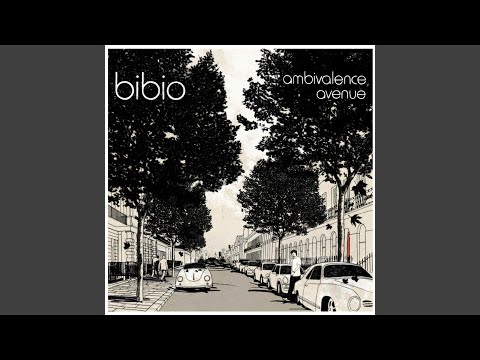
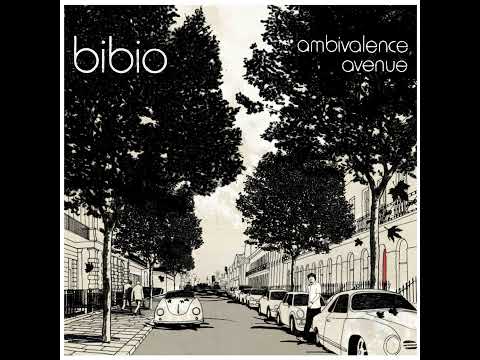
- Track #: 7 on Ambivalence Avenue
- Language: English
- Album: Ambivalence Avenue (2009); Ambivalence Avenue (Deluxe Edition) (2024)
- Music style: Folk guitar textures with electronic pop momentum
- Poetic meter: Free verse with iambic fragments
Canonical Entities & Relations
People
- Stephen James Wilkinson - writes and produces; performs as Bibio.
- Walt Whitman - poet whose ideas inform the lyric’s worldview.
Organizations
- Warp Records - releases the single/album and reissue.
- Amazon - uses the track in a Kindle campaign.
- Google - uses the track in a Project Glass teaser.
Works
- Ambivalence Avenue - album that includes “Lover’s Carvings”.
- Project Glass: One day - 2012 teaser video featuring the song.
- “The Dream” by Logic - hip-hop track sampling “Lover’s Carvings”.
Venues/Locations
- Kinver Edge, Staffordshire - sandstone carvings that helped spark the imagery.
Questions and Answers
- Why does the song feel like two pieces glued together?
- Because it is designed as a scene change. The waltz-like opening frames the lyric as memory; the second section snaps to a straight, uptempo pulse that reads as present-tense desire. That friction is the hook.
- What makes the lyric memorable despite its brevity?
- Concrete imagery. Names in sandstone, overgrowth, graveyards - compact nouns that carry decades of weather and meaning, leaving space for listeners to project their own stories.
- Is “Lover’s Carvings” more folk or more electronic?
- Both. The guitars and organic percussion carry the folk DNA; the arrangement logic, loop sensibility, and production patina place it squarely within electronica-informed indie pop.
- How did advertising change the track’s reception?
- Seasonal campaigns and a much-discussed tech teaser placed the song in front of millions who might never browse Warp’s catalog. It became the tune people Shazamed from TVs and tech blogs, then traced back to Bibio.
- What versions should a collector know?
- The 2009 album cut; a 2019 WXAXRXP Session performance with a different key/tempo feel; and remixes/edits that circulate, notably a Letherette take and other DJ edits.
- What does the title suggest?
- That relationships leave marks - not only on walls but on us. The song asks whether those marks persist after particulars have weathered away.
- Where does the famous “hook” appear?
- Around the pivot from the intro into the driving section - the moment sync editors love because it “lifts” instantly while staying warm and human.
- Does it belong to a scene?
- It sits adjacent to the late 2000s folktronica wave, sharing space with artists who folded fingerstyle guitar, tape texture, and gentle beats into pop-forward frameworks.
- Why does it work so well for montage and tech reveals?
- The rhythm shift creates a built-in narrative arc. Start reflective, go kinetic - a perfect shape for thirty to ninety seconds of visual storytelling.
Awards and Chart Positions
| Territory/Chart | Peak | Date | Notes |
|---|---|---|---|
| UK Official Independent Singles | 18 | January 22, 2011 | Two-week run on the indie singles list. |
| UK Official Independent Singles Breakers | 5 | January 2011 | Reflected post-advertising momentum. |
| UK Singles Chart | 170 | 2011 | Minor entry outside the Top 100. |
How to Sing Lover’s Carvings
Key and tempo: Studio recording centers on G major at roughly 118 BPM in 4/4. That pace gives the vocal an easy lilt over the driving acoustic pattern.
Vocal placement: The melody sits in a comfortable mid range - light, conversational head-voice blends work best. Aim for clarity over force; think “narrator at ease” rather than belter.
Common challenges: The big switch from the waltz-like intro feel to the straight-ahead groove can trip breath planning. The syllables are lean but frequent once the groove hits; sloppy diction blurs the imagery.
Step-by-step practice guide
- Tempo map: Practice the intro as a slow, swaying figure, then lock a metronome to 118 for the main section. Count silently through the transition so the first consonant of “Lovers’ names” lands cleanly on the grid.
- Diction pass: Drill the key nouns - “names,” “walls,” “graveyards,” “words,” “murk.” Keep consonants crisp without punching; you are etching, not chiseling.
- Breath design: Mark breaths at phrase ends, especially across “Overgrown, time has told / Meaningful hidden words.” Use low, quiet inhales to keep tone unforced.
- Flow and rhythm: In the second section, ride the guitar’s sixteenth-note feel by placing vowels slightly after the beat. It keeps the line buoyant without rushing.
- Accents and color: Lean into the verbs (“fade,” “appear,” “telling”) with a hair more length rather than volume. The lyric is meditative; let emphasis be elastic.
- Double-tracking or ensemble: A soft double one octave apart in the main section can widen the chorus-like lift without changing character.
- Mic work: Use a small-diaphragm condenser or a dynamic with gentle proximity to preserve fingerstyle detail. For live, keep the capsule off-axis to avoid picking transients spiking the vocal channel.
- Pitfalls: Over-bright tone on “carvings” can sound brittle; round the “ar” vowel. Over-quantizing the delivery kills the human sway - keep a touch of rubato at line starts.
Additional Info
Notable syncs: A Holiday 2010 Kindle ad made the tune ubiquitous for a season; a 2012 Project Glass video used the bright second section as aspirational underscore. Several publications documented those placements at the time, and The Guardian’s music blog even offered the track in an audio calendar feature, noting its advertising presence. According to NME-style coverage norms of the era, Warp’s catalog also placed Bibio in a flurry of brand spots that helped define early 2010s indie pop in ads.
Alternate versions and remixes: Beyond the album cut, there is a WXAXRXP Session recording from 2019 with a shifted key/tempo feel. Remixes and edits circulate, including a Letherette rework and other DJ edits that cut straight to the “lift” heard in the ads.
Samples and echoes: Hip-hop producers gravitated to the chime of the main section. The most widely cited sample appears in Logic’s “The Dream,” part of a wave of tracks that looped Bibio’s pattern into new contexts.
Deluxe reissue: In 2024, Warp marked the 15th anniversary with a digital Ambivalence Avenue (Deluxe Edition), adding unreleased material and returning the album to headlines for a new cohort of listeners.
As stated in The Guardian’s 2010 music blog, Bibio has directly linked the lyric to Whitman’s line “Divine am I inside and out,” and to a worldview shaped by Zen reflections on interconnectedness. And according to an interview roundup circulated around the album’s milestone years, the countryside of the West Midlands and Wales supplied not just imagery but a sensibility: handmade, weathered, quietly luminous. According to NME magazine-style retrospectives, the song’s second-section hook became a short-hand for sunlit, human-scale optimism in tech and lifestyle ads.
Sources: Warp Records; The Guardian; Official Charts Company; Diffuser.fm; SplendAd; Tunebat; SongBPM; WhoSampled; Bandcamp.
A-Z Lyrics Universe
Cynthia Erivo Popular
Ariana Grande Horsepower
Post Malone Ain't No Love in Oklahoma
Luke Combs Good Riddance (Time of Your Life)
Green Day Bye Bye Bye
*NSYNC You're the One That I Wan
John Travolta & Olivia Newton-John I Always Wanted a Brother
Braelyn Rankins, Theo Somolu, Kelvin Harrison Jr. and Aaron Pierre The Power of Love
Frankie Goes to Hollywood Beyond
Auli’i Cravalho feat. Rachel House MORE ›