Don't Be Sad Lyrics – Joe Purdy
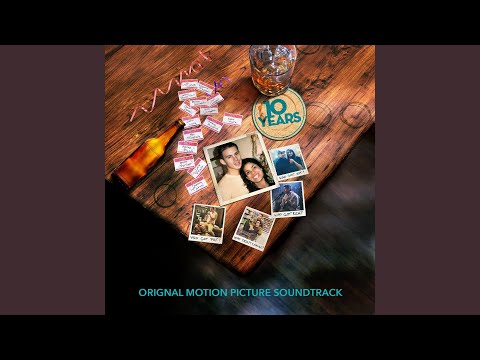
Soundtrack Album: 10 Years
[Verse 1]
I know that you wish this was over
Don't be sad — get up
[Instrumental Break]
(music)
Your heels ain't tough enough, Rosten
(music)
[Verse 2]
There you are, just standing at the window
With your head down, in your face
And I can tell that you can’t wait to go
(music)
[Pre-Chorus]
Don’t you know it’s your...
(music)
Much too scared to ask
[Chorus]
Don’t be sad, kid
Don’t be sad
Won’t be sad, kid
Don’t be sad
(music)
[Bridge]
Your heels ain’t tough enough
You shouldn’t grow up way too fast
When I see you across the room
I’m just a boy — it’s way too soon for that
[Chorus – Reprise]
Don’t be sad
Don’t be sad
Don’t be sad
Don’t be sad
(music)
Don’t be sad, don’t be sad, don’t be sad
Don’t be sad, don’t be sad
Don’t be sad, don’t be sad, don’t be sad
Don’t be sad, don’t be sad
(music)
[Outro]
Don’t be sad
(music)
Don’t be sick
(fade out)

10 Years
Soundtrack Lyrics for Movie, 2012
Track Listing
Oscar Isaac
Alexander
Bibio
Willie Wright
Bushwalla
Rogue Wave
Joe Purdy
Oscar Isaac
Chad Fischer
Willie Wright
The Pharcyde
Song Overview
Review and Highlights
Quick summary
- A folk ballad written and performed by Joe Purdy, released as Don't Be Sad (Demo) on the 10 Years original motion picture soundtrack in 2012.
- Appears in the ensemble reunion film 10 Years, alongside cues by composer Chad Fischer and tracks by Oscar Isaac, Rogue Wave, and others.
- Acoustic guitar at the core, sparse production, and a soft vocal that leans conversational - matching the film's intimate, small-town afterglow.
- Lyrics speak to a younger listener - maybe a kid, maybe the kid within - with refrains that coach tenderness rather than preach.
- This soundtrack cut is labeled a demo, signaling a deliberately unvarnished performance aligned with Purdy's homespun aesthetic.
Creation History
Joe Purdy built his reputation on clear-eyed story songs tracked with minimal adornment, often in close partnership with independent film and television supervisors who favored his plainspoken delivery. For Don't Be Sad (Demo), the choice to keep the cut bare - just voice, guitar, and the hush around them - mirrors the movie's posture: friends reconvening in ordinary rooms, fragile feelings hanging in the air. The soundtrack was issued by a film music imprint, gathering a short set of songs used on screen. The sequencing places Purdy late in the running, after beats of nostalgia, mischief, and regret from other artists, so his refrain lands like a benediction at the end of a bittersweet night.
As for the on-screen presence, 10 Years trades spectacle for micro-dramas, and Purdy's tune tracks that ethos. You can hear the tempo breathe - slight pushes and pulls that feel human - and that elasticity lets the chorus function as both lullaby and pep talk. Production-wise, the "demo" tag is not an apology; it's a signal. The room tone, pick noise, and gentle dynamics are part of the message. They invite you closer, as if Purdy had set up in the corner of a living room after the party.
Key takeaways
- Uncluttered folk arrangement centers intimacy over polish.
- Refrain repeats like a mantra, framing compassion as a steady practice.
- Works diegetically with the film's themes of reunion, aging, and do-over fantasies.
- "Demo" framing heightens the song's trustworthiness and proximity.
Song Meaning and Annotations
Plot
The text sketches a small, quiet scene. A you - likely younger, or feeling young and small - stands at a window with head down, itching to leave. A voice enters not as tyrant but as companion: "Don't be sad - get up." There is a touch of humor and affection in the line about heels not being "tough enough," then a caution against growing up too fast. The narrator sees the person across the room and admits his own vulnerability: "I'm just a boy - it's way too soon for that." The arc never explodes into drama. Instead, it paces through instrumental breaths and repeated choruses that function like exhalations. The outro whispers a final reassurance as the instruments drift.
Song Meaning
At heart, this is a reassurance song - a hand on the shoulder. The repeated negative imperative "Don't be sad" might read glib if delivered with bravado, but Purdy breaks the phrase into a set of soft nudges: get up, take a step, remember you are not alone. The window image frames the inner weather; the "head down" line brings the body into it. By owning his own smallness - "I'm just a boy" - the singer refuses the savior role. That humility shifts the song from advice to solidarity. Musically, the folk cadence and unhurried strum underline companionship rather than urgency. The cumulative effect feels like the soundtrack of a friend walking you out of a spiral.
Annotations
"Your heels ain't tough enough, Rosten."
A tossed-off line that reads like a private nickname or in-joke. Whether "Rosten" is a surname, given name, or a placeholder, the intimacy matters more than the literal reference. The phrase locates the singer and listener inside a shared world - not general advice to everyone, but a message for one person in one room. That specificity is a Purdy hallmark: particulars make comfort believable.
"You shouldn't grow up way too fast."
The lyric tags one of the film's central currents - the rush of adulthood. The characters in the movie are staring at life choices under fluorescent gym lights. This line offers a counter-principle: do not let milestones bully you. Let time be time. Heard inside the soundtrack, the counsel lands as both retroactive wish for these characters and preventative medicine for us.
"When I see you across the room, I'm just a boy - it's way too soon for that."
Two admissions in one breath: the singer is not as composed as he sounds, and proximity does not equal readiness. The paradox gives the song its warmth. Rather than a posture of authority, we get a co-struggle. That anchors the refrain; telling someone to reject sadness works only if you acknowledge your own limits.
Arrangement and feel
The piece settles into an easy mid-slow pulse, guitar-forward, with room left for silence. Even the instrumental breaks are not about display; they are coded breath marks. You can hear the pick loosen slightly on the chorus, giving the mantra a faint swell. The vocal sits close to the mic, breathy but sure, with very light ambience. That small-signal sound plays well on film, where dialogue and room tone dominate. It also flatters the lyric's posture: the song does not arrive to take space; it offers space back.
Genre touches
Folk is the chassis, but there is a trace of Americana's porch swing here - plain harmonic movements, organic mic capture, and the sense that the first complete take might have been the keeper. That is part of why the "demo" tag feels right rather than provisional. The song lives in the performance, not in studio architecture. According to NME magazine, the early 2010s saw a wave of stripped, acoustic-forward soundtrack cuts threading through indie films; Purdy's contribution sits squarely in that lane.
Emotional arc
The first verse recognizes the desire to be done, to leave. The pre-chorus confesses fear. The chorus does not rebut with logic; it repeats care. The bridge turns formative - not yet, not so fast - and then returns to the mantra. The ending favors fade over exclamation, a choice that keeps the promise intact: the listener can press stop, but the reassurance feels like it goes on in the next room.
Imagery, symbols, and phrasing
Windows, heels, rooms - everyday domestic objects. Nothing mythic, no big allegory. The ordinary is the point. The heel line sneaks in a gentle jab at performative toughness; the window points to liminality, neither inside nor outside. The refrain's simplicity makes it easy to carry; it is a line you can recite under your breath on a train ride home. The kid-address ("kid") also matters. It bends the song toward mentorship without condescension.
Key Facts
- Artist: Joe Purdy
- Featured: None
- Composer: Joe Purdy
- Producer: Not publicly credited for this demo release
- Release Date: September 11, 2012
- Genre: Folk, Americana
- Instruments: Acoustic guitar, voice
- Label: Relativity Music Group
- Mood: Consoling, reflective
- Length: 3:53
- Track #: 8 on the soundtrack
- Language: English
- Album: 10 Years - Original Motion Picture Soundtrack
- Music style: Intimate acoustic ballad with demo framing
- Poetic meter: Mixed accentual - conversational line lengths
Canonical Entities & Relations
- Joe Purdy - wrote and performed - Don't Be Sad (Demo).
- Relativity Music Group - released - 10 Years - Original Motion Picture Soundtrack.
- Chad Fischer - composed - score for the film 10 Years.
- Oscar Isaac - performed - multiple songs on the same soundtrack.
- Anchor Bay Films - distributed - the film 10 Years in the United States.
- Various Artists - contributed songs - the soundtrack album.
- 10 Years - film - included - Don't Be Sad (Demo) in its soundtrack.
- Jamie Linden - directed - the film 10 Years.
Questions and Answers
- Why is the track labeled a demo?
- The "demo" label signals a deliberately raw capture that preserves proximity and breath. For a film built on small confessions and half-finished plans, that choice fits better than a glossy full-band cut.
- Where does the song sit on the soundtrack?
- It is track 8, after Rogue Wave's "Slow Down Kid" and before Oscar Isaac's take on "You Ain't Goin Nowhere."
- Does the song appear in any pivotal scene?
- It underscores the film's reflective tone rather than a single climactic beat, contributing to the late-night, what-now air of reunion and reconsideration that runs through the third act.
- What makes the refrain effective on screen?
- Repetition. The line "Don't be sad" cycles like someone steadying their friend. On screen, where eyes and gestures carry weight, a repeating phrase leaves space for faces to do the storytelling.
- Is there a studio album version by Purdy?
- On official streaming platforms, the only widely available cut tied to this song and film is the demo version on the soundtrack. Purdy's catalog includes many adjacent tones, but no alternate official studio version has been promoted for this title.
- How does it relate to Joe Purdy's broader work?
- It aligns with his practice of giving listeners characters and rooms rather than slogans - acoustic scaffolding, human-scale voices, and a generous eye for vulnerability.
- How does it compare with other soundtrack entries from that era?
- Early 2010s indie films often leaned on intimate folk tracks to bridge scenes. As stated in the Rolling Stone 2024 coverage of soundtrack trends, supervisors prioritized songs that felt like secrets whispered in quiet rooms. Purdy's cut is a textbook example.
- What is the likely key and tempo feel?
- The performance sits in a mid-slow folk pocket with a relaxed, speaking-voice register. The pulse is steady but elastic, leaving room for the vocal to ride slightly ahead or behind the guitar.
- Why does the lyric address a "kid"?
- That nickname folds distance. It makes the counsel tender, not scolding, and suggests the singer protects the listener's innocence while admitting his own unfinished growth.
- What is the line about "heels" doing there?
- It gently mocks posturing, hinting that hard shells crack. That wink disarms and clears the way for the chorus to work as care, not command.
- How does the song handle "growing up"?
- By urging patience. The bridge counsels against speeding through rites of passage. Within the film, that maps to characters who want shortcuts around the mess of becoming adults.
- Does the recording include harmonies or doubles?
- The soundtrack version is spare. If any doubles are present, they are subtle enough to disappear into room tone, keeping the focal point on a single, direct voice.
Additional Info
The 10 Years album places Purdy among a specific crew. Oscar Isaac contributes multiple songs and covers, Chad Fischer anchors with a score suite, and the curation leans toward wood-and-wire textures. Filmmusic reporter notes that the set was issued just ahead of the film's US release, a typical promo rhythm for indie dramas. In short: the music was treated as part of the storytelling package, not an afterthought. One critic at the time likened Purdy's vocal soulfulness to Tony Lucca - a way of saying that the singing feels both weathered and gentle.
Purdy has long been a quiet favorite for supervisors looking to cue tenderness without syrup. His recordings wear the creak of rooms well, and his lyric craft is intent on small kindnesses - advice delivered without lecture. Even when he steers into sorrow on other albums, he carries the same bedside manner you hear here. That steadiness is why a three-word chorus can carry so far.
Sources: Spotify, Apple Music, FilmMusicReporter, FilmMusic.com, IMDb, Wikipedia, Shazam, Tidal, Golden Mixtape.
A-Z Lyrics Universe
Cynthia Erivo Popular
Ariana Grande Horsepower
Post Malone Ain't No Love in Oklahoma
Luke Combs Good Riddance (Time of Your Life)
Green Day Bye Bye Bye
*NSYNC You're the One That I Wan
John Travolta & Olivia Newton-John I Always Wanted a Brother
Braelyn Rankins, Theo Somolu, Kelvin Harrison Jr. and Aaron Pierre The Power of Love
Frankie Goes to Hollywood Beyond
Auli’i Cravalho feat. Rachel House MORE ›