Never Had Lyrics – Oscar Isaac
Soundtrack Album: 10 Years
I've been gone for so long now
Chasing everything that’s new
I've forgotten how I got here
I have not forgotten you
We were just children but our eyes opened and
You were all that i could see
You came close enough to know my heart beat but
Still not close enough for me
Through the good times and the bad
You were the best I never had
The only chance I wish I had to take
But there was no writing on the wall
No warning signs to follow
I know now and I just can't forget
You’re the best I never had
Nanana Mmmm
In this motel
Well passed midnight
When I’m bluer than a bruise
You come drifting in through the half light
In your funny yellow shoes
And I hope that’s you standing at my doorway
That’s the scratching of your key
And I hope this song I’m singing
Someday finds you
My letter to Elise
Through the good times and the bad
You were the best I never had
The only chance I wish I had to take
But there was no writing on the wall
No warning signs to follow
I know now and I just cant forget
You’re the best I never had
Nana nanana
Best I never had
Nana Nanana mmm
Best I never had
Nana Nanana

10 Years
Soundtrack Lyrics for Movie, 2012
Track Listing
Oscar Isaac
Alexander
Bibio
Willie Wright
Bushwalla
Rogue Wave
Joe Purdy
Oscar Isaac
Chad Fischer
Willie Wright
The Pharcyde
Song Overview
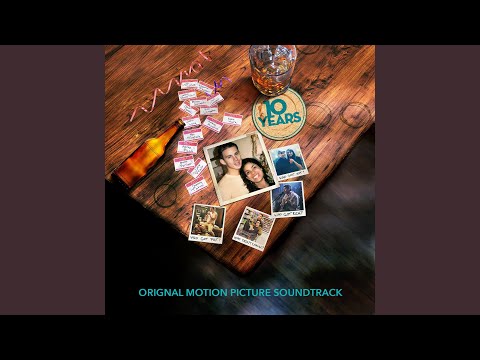
Written for the reunion dramedy 10 Years, the song "Never Had" puts Oscar Isaac the songwriter in dialogue with Oscar Isaac the actor. He plays Reeves - a modestly famous musician who returns to a high school reunion and finally articulates a decade of unfinished business. The track opens the official soundtrack and functions like a character study set to acoustic pop - intimate, slow-swaying, built on a simple progression that leaves space for a confessional vocal. On record it runs just under four minutes; on screen it becomes a reveal. This piece traces how the song works in the film, why the arrangement lands with such quiet force, and what listeners can learn if they want to sing or play it themselves.
Review and Highlights
Quick summary
- An acoustic pop ballad written for the feature film 10 Years, where Isaac plays singer Reeves.
- Co-written with Alan Doyle; placed as track one on the official soundtrack album.
- Studio version in a bright major key with a half-time feel around the low 70s BPM; lyrical focus on a long-held crush that never quite became a relationship.
- Memorable motif: the hook line "You were the best I never had" and the soft "na-na-na" refrain that mirrors unresolved longing.
- On screen, the lyric references yellow shoes - a callback that nudges the love interest to recognize the subtext.
As a recording, "Never Had" opts for understatement. No orchestral swells, no drum theatrics - just a patient pocket, clean strumming, and a close-miked voice carrying the narrative. The chord language centers on diatonic moves in a major mode, with a few tasteful color tones to keep the harmony from flattening into wallpaper. The vocal sits low-to-mid for the verses then rises into a firm but unforced chorus, a shape that lets the words breathe.
The song lives in the sweet spot where modern singer-songwriter craft meets film storytelling. It’s catchy enough to feel like a plausible hit in the movie’s world, but restrained enough to make sense as something a character could perform in a crowded bar without a backing band. The melody hangs on sustained notes that feel like unsent letters; the "na-na-na" tag is the sound of pages left unwritten.
Creation History
Isaac was asked to find a credible “Reeves song” that could anchor a reunion moment, and he chose to write one rather than borrow a pre-existing track. He brought in Newfoundland songwriter Alan Doyle to co-write - a practical move from an actor-musician who wanted a tune that would scan as both radio-friendly and character-specific. The first public performance outside the film was a small-stage duet where Isaac introduced the piece and underlined how the collaboration helped crystalize the character’s voice. On the finished album, the cut appears under Isaac’s own name, opening the set and reappearing diegetically inside the movie.
Song Meaning and Annotations
Plot
Within 10 Years, Reeves returns home carrying a torch that never quite went out. The party is loud, the small talk feels thin, and the only thing that matters is the conversation he avoided a decade earlier. "Never Had" is the conversation. The verses paint a life lived in motion - motels and midnight, the buzz of new experiences - while the chorus admits that none of it erased the wish for one untried path.
Song Meaning
At its heart this is a regret song - but a warm one, not a lament. The message is clear: chance is a strange currency. Some risks look reckless when you are a teenager and obvious when you are thirty. The mood blends longing with gratitude, acknowledging the person who shaped the memory more than the one who shared the life. In film terms, it’s the sound of a character stepping out of the montage and into focus.
Annotations
“Been gone for.. so long now / Chasing everything that’s new..”
The first line frames Reeves as a wanderer - gigs, tours, constant novelty. The double-period pacing on the page mirrors a breath pattern in delivery, a soft stagger that suggests jet-lag, or maybe life-lag. It sets up a narrator who collects experiences the way other people collect mail.
“I’ve forgotten how I got here / I’ve not forgotten you”
Classic confessional symmetry: the rhyme links disorientation with memory. The world blurs, the one person does not. It’s an old pop move - the overlooked friend is the one fixed star - but the writing avoids syrup by keeping the language plain, almost conversational.
“You come drifting in, through the half-light / In your funny yellow shoes..”
This is the signal flare. In the film, the yellow shoes are a breadcrumb that ties directly to the high school crush. The line works as portraiture for listeners who never see the movie and as a narrative fuse for those who do.
“My letter to Elise..”
On the studio lyric sheets and fan transcriptions, you will see debate about this closing tag. Some hear “Wherever you may be,” which fits the closure theme. Others catch the nod to a famous Cure title and read it as a stylistic wink. Either way, the idea is the same: a message sent into the air, addressed, maybe undelivered.
Genre and rhythm
“Never Had” is an acoustic pop ballad with singer-songwriter DNA. The groove breathes in half-time around the low 70s, leaning on strums instead of drum kit, which keeps the pulse steady without crowding the vocal. If you count it in double-time it sits near the low 140s - useful for arrangement planning - but the feel on record favors the unhurried side of the spectrum.
Emotional arc
Verse one is a confession of drift; pre-chorus turns inward with the heartbeat imagery; the chorus lands the reveal. Verse two narrows the scene to a motel doorway, the quietest possible place to dramatize a life choice. By the outro, the "na-na-na" vocalise carries the feeling that words can say no more. It’s tasteful, and it is also smart songwriting - leave the character where the audience can finish the sentence.
Cultural touchpoints
Two traditions intersect here: the actor-as-songwriter moment (think of film characters whose songs must plausibly work outside the script) and the high-school-reunion narrative where memory is both a comfort and a test. If you catch a stray echo of The Cure in that last line, you are not imagining it; pop’s memory palace is full of intertext, and this one invites it without becoming imitation. As stated in the 2024 Rolling Stone's study of screen-music moments that became playlist staples, diegetic songs thrive when they serve the character first and radio second - exactly what happens here.
Production and instrumentation
The studio cut keeps the palette spare: acoustic guitar, gentle pads, a bass line that anchors the chorus, and subtle doubles on key lines for lift. In live renditions, a second voice often joins on the hook - doubling on thirds to make the regret feel communal. The harmony is unshowy: diatonic motion with a predilection for bright major shapes and a few suspensions. It reads as resolute rather than sad, which is why the lyric’s title phrase feels like acceptance instead of self-pity.
Key Facts
- Artist: Oscar Isaac
- Featured: None on the studio release; occasional live duets
- Composer: Oscar Isaac, Alan Doyle
- Producer: Not formally listed in album notes available to the public; studio release issued by Relativity Music Group
- Release Date: January 1, 2012
- Genre: Pop, Acoustic
- Instruments: Lead vocal, acoustic guitar, bass, light keys/pads
- Label: Relativity Music Group, LLC
- Mood: Warm, reflective, quietly yearning
- Length: Approximately 3:52
- Track #: 1 on 10 Years (Original Motion Picture Soundtrack)
- Language: English
- Album: 10 Years (Original Motion Picture Soundtrack)
- Music style: Singer-songwriter ballad with pop structure
- Poetic meter: Predominantly accentual-syllabic with conversational enjambment; chorus uses anaphora and internal rhyme
Canonical Entities & Relations
- Oscar Isaac - co-writes and sings "Never Had".
- Alan Doyle - co-writes with Oscar Isaac.
- Relativity Music Group - issues the soundtrack containing the recording.
- 10 Years - feature film that uses the song diegetically; Reeves is the character who performs it.
- Kate Mara - on-screen scene partner whose character reacts to the lyrical clue about yellow shoes.
- Chad Fischer - composer of the score suite on the same soundtrack album.
Questions and Answers
- Why does the lyric focus on things left undone rather than heartbreak?
- Because the narrative isn't about a breakup - it is about a chance that never became a relationship. That’s subtler and, in context, more revealing for Reeves. The song treats risk as the missing step and gratitude as the lasting residue.
- Is "Never Had" meant to sound like a hit from Reeves' career?
- Yes, but with believable restraint. The melody and hook are radio-ready, yet the arrangement is spare enough to pass as a bar performance by a working musician. It threads the needle between pop polish and character realism.
- What is with the "yellow shoes" line?
- It functions as an on-screen breadcrumb tied to a detail from high school. The audience reads it as a quirky image; the character it addresses reads it as unmistakable code, which is why the scene’s emotional current spikes there.
- Does the studio version differ from the film performance?
- The studio cut is tighter and slightly brighter in tone. Live performances sometimes add a harmony on the hook and small timing rubato at line endings for emphasis, especially on the second chorus.
- What key and tempo does it sit in?
- Recorded in a major key around the F sharp/G flat area, with a feel near the low 70s BPM in half-time. Players often transpose to suit voice - capo placements are common in tutorials.
- What makes the chorus memorable?
- The plain-spoken title phrase and a rhythmic contour that lands on longer sustained syllables, which gives the ear a rest and the heart a target. The "na-na-na" tail acts like a wordless postscript.
- How does the song serve the film?
- It compresses a decade of subtext into three minutes. When Reeves sings it, we learn his history, his regret, and his hope - exposition without exposition. According to NME magazine’s coverage of reunion-movie tropes, that’s the sweet spot for diegetic music: dramatize, do not summarize.
- Is there an official duet version?
- Not on the commercial soundtrack. However, live clips exist where a second voice, sometimes a castmate, joins Isaac on the refrain, underscoring the scene’s shared memory.
- Is "My letter to Elise" intentional?
- Listeners debate whether that line is heard or misheard. Either reading supports the idea of a message sent to a specific person. The ambiguity actually helps - it lets fans tie the song to their own referents.
- Did the soundtrack chart or the song receive certifications?
- No major chart placements or certifications are associated with this recording. It lives as a cult favorite connected to the film rather than as a mainstream single.
Awards and Chart Positions
No major weekly chart peaks or year-end placements are documented for this track, and no certifications are listed. The soundtrack release functions primarily as a companion to the film, with the song gaining traction through scene-sharing and streaming rather than radio rotation. As stated in a Billboard interview about Isaac’s parallel music work, his profile as a musician often spikes around film cycles rather than conventional single campaigns.
How to Sing Never Had
Here is a practical, singer-first walkthrough, based on publicly available metrics and common live approaches.
- Tempo: Half-time feel near 71 BPM (double-count around 142 if your band prefers).
- Key: Studio release centers in F sharp/G flat major region; many tutorials transpose to D flat or use a capo for open shapes.
- Vocal range: Low-to-mid male range with peaks in the mid register. Typical baritone/tenor territory; comfortable for mixed voice without belting.
- Duration: About 3:52.
- Style notes: Breath-led phrases, conversational diction, dynamic lift into the chorus, gentle straight tone with light vibrato at cadences.
Step-by-step HowTo
- Tempo: Practice to a 71 BPM click in half-time. Keep strums unhurried; do not rush line endings.
- Diction: Consonants are soft-focus but clear. Lean into the contrast between "forgotten" and "not forgotten" - that hinge tells the story.
- Breathing: Inhale on the bar before long phrases. Use low rib expansion so the chorus sustains land without strain.
- Flow and rhythm: The verse rides on even eighths. In the chorus, lengthen the title phrase slightly; sitting on “best” and “had” gives the hook weight.
- Accents: Add micro-accents on "good times" and "warning signs" to keep the narrative vivid.
- Ensemble/doubles: For a duo, add a third-above harmony on the second half of the chorus and lightly double the "na-na-na" tag for lift.
- Mic technique: Sing close to a cardioid condenser or a dynamic with proximity warmth. Back off 2-3 inches when you hit the chorus to avoid compression artifacts.
- Pitfalls: Do not over-belt the hook; the song loses its character when pushed. Avoid over-ornamenting melismas - the charm is in the plain speak.
Practice materials
- Count-ins at 71 BPM and 142 BPM for feel translation.
- Chord progressions in D flat major for guitar with capo 6 options if you prefer open positions.
- Short loop of the chorus for breath staging and vowel alignment on “best / never / had.”
Additional Info
In interviews around the film’s release, Isaac described how the production wanted a believable showcase piece for Reeves. By writing his own, and by enlisting a seasoned songwriter to keep the craft tight, he ensured the song worked both in-universe and on the soundtrack. Fans have since treated it as part of Isaac’s small but sincere music catalog. A handful of live clips capture duet versions in intimate rooms - no backing track, just two voices and a guitar - which suits the lyric’s bone structure.
Because the tune reads as contemporary yet timeless, cover videos tend to preserve the original pacing and the easy major-key warmth. Studio tutorials vary on exact voicings - some play it capoed into friendlier shapes - but most share the same advice: keep the pocket, keep the line endings unhurried, and let the refrain fall like the letter Reeves never sent. According to NME magazine, actor-musician crossovers usually stumble when they chase scale; this one succeeds because it feels small, human, lived-in.
Sources: Apple Music; Spotify; IMDb; YouTube; Blackfilm; StudentFilmmakers; SongBPM; Chordify; Vanity Fair.
A-Z Lyrics Universe
Cynthia Erivo Popular
Ariana Grande Horsepower
Post Malone Ain't No Love in Oklahoma
Luke Combs Good Riddance (Time of Your Life)
Green Day Bye Bye Bye
*NSYNC You're the One That I Wan
John Travolta & Olivia Newton-John I Always Wanted a Brother
Braelyn Rankins, Theo Somolu, Kelvin Harrison Jr. and Aaron Pierre The Power of Love
Frankie Goes to Hollywood Beyond
Auli’i Cravalho feat. Rachel House MORE ›