You Ain't Goin Nowhere Lyrics – Oscar Isaac
Soundtrack Album: 10 Years
Clouds so swift
Rain won't lift
Gate won't close
Railings froze
Get your mind of wintertime
You ain't goin' nowhere
Whoo-ee ride me high
Tomorrow's the day
My bride's gonna come
Oh, oh, are we gonna fly
Down in the easy chair
I don't care
How many letters they sent
Morning came and morning went
Pick up your money
And pack up your tent
You ain't goin' nowhere
Whoo-ee ride me high
Tomorrow's the day
My bride's gonna come
Oh, oh, are we gonna fly
Down in the easy chair
Buy me a flute
And a gun that shoots
Tailgates some substitutes
Strap yourself
To the tree with roots
You ain't goin' nowhere
Whoo-ee ride me high
Tomorrow's the day
My bride's gonna come
Oh, oh, are we gonna fly
Down in the easy chair! Genghis Khan
He could not keep
All his kings
Supplied with sleep
We'll climb that hill no matter how steep
When we come up to it
Whoo-ee ride me high
Tomorrow's the day
My bride's gonna come
Oh, oh, are we gonna fly
Down in the easy chair
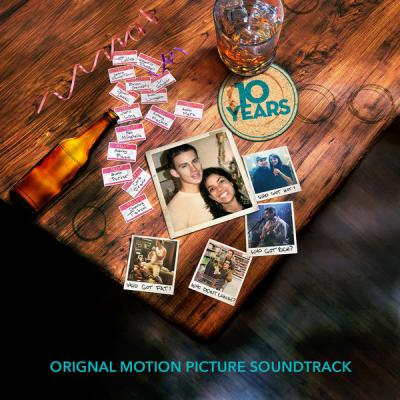
10 Years
Soundtrack Lyrics for Movie, 2012
Track Listing
Oscar Isaac
Alexander
Bibio
Willie Wright
Bushwalla
Rogue Wave
Joe Purdy
Oscar Isaac
Chad Fischer
Willie Wright
The Pharcyde
Song Overview

This is the campfire classic reimagined for a reunion night. In 10 Years, the familiar Bob Dylan tune turns into a lived-in barroom singalong that doubles as character work: Oscar Isaac - playing Reeves - leans into an easy, rolling cadence while Chad Fischer anchors the harmony. It is a cover that respects the song’s wide-open surrealism and its front-porch swing, but it also fits the movie’s unfussy vibe. Where many versions race or twang, this one smiles and sways - a friendly nod to a 1960s chestnut from the vantage point of 2012.
Review and Highlights

Quick summary
- A warm, acoustic cover performed by Oscar Isaac with Chad Fischer for the feature film 10 Years, later issued on the soundtrack album.
- Originally written by Bob Dylan in the late 1960s; the song became a country-rock staple via The Byrds before Dylan released his own studio version.
- Film performance functions diegetically - characters sing it inside the story - keeping arrangement light and singalong-ready.
- Hook rests on the call-and-response feel of the chorus and an easy shuffle that invites group vocals.
- Album sequencing places it near the back half, just ahead of the score suite, a gentle comedown after indie and soul-leaning cuts.
What makes this rendition click is its unhurried phrasing. Isaac’s lead sits conversationally in the pocket while Fischer adds that companion voice you hear in rooms where the audience knows the words. The guitar strum is steady eighths, the harmonic movement stays close to home, and the performance resists any urge to oversell. The surreal images - Genghis Khan and his brother Don, a sky that cries, a dog that talks - sound less like nonsense and more like good company: jokes traded at the end of a long night.
Creation History
For 10 Years, Chad Fischer handled the score and music production, and the soundtrack gathers existing cuts plus on-screen performances. In the film itself, the tune appears as a casual singalong with Isaac, Fischer, and - in the scene - castmate voices drifting in. The commercial track credit highlights Isaac; in listings for the movie’s soundtrack detail, Fischer is credited as producer and performer on the sequence, which squares with his larger music-supervision and scoring role on the project.
Song Meaning and Annotations

Plot
Inside 10 Years, the song functions like a group memory. Old classmates drift between nostalgia and friendly mischief; someone starts a tune everyone half-remembers; soon the room settles into common time. It’s not about moving the plot forward so much as capturing the reunion’s after-hours glue - a shared language that predates adulthood.
Song Meaning
Dylan’s lyric reads like cheerful surrealism with a wink. The refrain claims you are going nowhere, but the verses are all motion: clouds racing, packs getting stowed, bridges to be climbed. That contradiction is the joke and the point: the destination is less important than the fellowship. In this film take, it becomes a weather report for aging friendships - the kind of song you only sing with people who knew you when.
Annotations
“Clouds so swift / The rain's fallin' in”
Weather as character. The image sets tempo and mood - brisk, a little messy, but not threatening. For a reunion scene, that’s the right tone: outside might be chaotic; in here we have a melody and a beat.
“Genghis Khan / And his brother Don”
A classic Dylan grin. The rhyme turns a world-conqueror into your uncle at the barbecue. It collapses history into neighborhood chatter and says, in effect, that all of us are invited to this nonsense parade.
“We’ll climb that bridge after it’s gone / After we’re way past it”
Time-travel logic as philosophy: by the time you think you have a problem, you’ve already lived through it. That fatalistic optimism is why the song sits so well in a story about people measuring who they were against who they became.

Genre/style fusion and the driving rhythm
The cut keeps the country-rock DNA of the late 1960s while smoothing the twang into modern acoustic pop. The pocket is a relaxed shuffle in half-time feel, designed for strum-and-hum participation rather than flashy breaks. If you have ever heard porch-pickin that invites a third harmony on the fly, you know the feel.
Emotional arc
Verse 1 shakes off weather and small obstacles with a shrug; the first chorus turns communal with that rising “Whoo-ee” tag; verse 2 rides the joke just enough to keep the grin; the final refrains invite everyone to pile in. No big catharsis, just contentment at being in the room when the tune arrives.
Cultural and historical touchpoints
The song’s road traveled is famous: demoed with The Band in the Basement Tapes era, taken to market by The Byrds during their Nashville pivot, then revisited by Dylan himself with a sly lyrical jab. It has been a campfire, club, and festival staple ever since, crossing folk, country-rock, and Americana scenes. As NME magazine has noted of durable Dylan covers, longevity favors songs that carry well without arrangement gimmicks - this one practically teaches itself to a crowd.
Production and instrumentation
The soundtrack version leans on acoustic guitar, a steady low-end foundation, and stacked vocals across the chorus. Fischer’s influence is audible in the clean capture and the feel-first mix: the voices, not the gear, run the show. You hear enough room to imagine the bar, enough blend to hum along without thinking twice.
Key Facts
- Artist: Oscar Isaac, Chad Fischer
- Featured: Diegetic ensemble voices in-film; album track credited primarily to Oscar Isaac
- Composer: Bob Dylan
- Producer: Chad Fischer (film sequence and soundtrack context)
- Release Date: January 1, 2012
- Genre: Country, Acoustic
- Instruments: Lead and harmony vocals, acoustic guitar, bass, light percussion
- Label: Relativity Music Group, LLC
- Mood: Breezy, communal, good-humored
- Length: Approximately 3:42
- Track #: 9 on 10 Years (Original Motion Picture Soundtrack)
- Language: English
- Album: 10 Years (Original Motion Picture Soundtrack)
- Music style: Country-rock standard rendered as modern acoustic singalong
- Poetic meter: Conversational accentual verse with surreal list-making and internal rhymes
Canonical Entities & Relations
- Bob Dylan - writes the song during the Basement Tapes period; later records and releases his own studio take.
- The Byrds - first to commercially release the song; help cement its country-rock identity.
- Oscar Isaac - sings lead in the film and on the soundtrack track credit.
- Chad Fischer - produces the sequence and score; appears as performer in the on-screen rendition.
- Relativity Music Group - issues the soundtrack album.
- 10 Years - film that uses the performance diegetically as part of the reunion atmosphere.
Questions and Answers
- How does this arrangement differ from classic country-rock versions?
- It trims the twang and keeps the groove mellow. Pedal steel is swapped for layered vocals, and the tempo breathes a touch more, which suits a barroom chorus rather than a studio single.
- Why does the lyric feel both nonsensical and wise?
- Dylan stacks surreal images on simple verbs. The surface is playful - dogs that talk, birds that fly - but the refrain’s message is acceptance. The mix creates a friendly, knowing shrug.
- Is the film version a duet?
- On screen, you hear Isaac with Fischer and cast voices joining in. On streaming platforms, the track credit typically lists Isaac as the artist while acknowledging Fischer’s score work elsewhere on the album.
- What key and tempo does this version use?
- Contemporary key-detection services tag the released track in G major with a pulse around 154 BPM if you count in straight time - which feels like a relaxed half-time in the mid-70s for performers.
- What makes the chorus so sticky in a room?
- The vowels line up for easy blend, and the call of “Whoo-ee” sets a cue anyone can catch. Harmonies slot naturally in thirds and fifths without tricky leaps.
- How does this cover serve the film’s story?
- It gives the ensemble a shared melody that predates adult roles. You can measure old relationships by who leans in on which lines - a subtle social map in three minutes.
- Does the soundtrack place it near other character songs?
- Yes. It sits just before the score suite, following intimate indie selections; the pacing feels like last-call music before the credits pull you out of the room.
Awards and Chart Positions
This particular cover is not associated with notable single chart entries or certifications. The composition, however, has a storied chart life via other recordings: The Byrds took it to the Billboard Hot 100 in 1968, and two ex-Byrds placed a country hit with it in 1989. Those entries underline why the tune remains a go-to for country-rock sets.
| Artist | Release | Chart | Peak | Notes |
|---|---|---|---|---|
| The Byrds | 1968 single | Billboard Hot 100 | #74 | First commercial release of the song; tied to Sweetheart of the Rodeo. |
| Roger McGuinn & Chris Hillman | 1989 version | Hot Country Songs | Top 10 | Part of the era’s Byrds-adjacent country resurgence. |
How to Sing You Ain't Goin Nowhere
Think porch, not pageant. The charm lies in the pocket and the friendly blend, not in vocal athletics.
- Tempo: Approximately 154 BPM if you count straight; performers often feel it in half-time around 77 BPM.
- Key: G major in common releases of this soundtrack track.
- Vocal range: Low-to-mid register for the verses, lifting to mid register in the chorus; comfortable for baritones and light tenors, easily downshifted for altos.
- Duration: About 3:42.
- Style notes: Conversational lead, light harmony in thirds on chorus lines, and a smile you can hear. Keep diction plain; let the words fall off the beat now and then.
Step-by-step HowTo
- Tempo: Set a click near 77 BPM in half-time and strum even eighths. The feel should sway, not march.
- Diction: Enunciate place-holder images clearly - “Genghis Khan,” “brother Don” - so the humor lands without mugging.
- Breathing: Quick nose inhale on bar lines; conserve air for the long “Whoo-ee” pick-ups.
- Flow and rhythm: Keep verses laid back; lean into the chorus downbeats on “Tomorrow’s the day / My bride’s gonna come.”
- Accents: Soft stress on rhyme anchors like “high,” “fly,” and “chair.”
- Ensemble/doubles: Add a third-above harmony on “Whoo-ee ride me high,” drop to unison on “You ain’t goin nowhere,” then widen again on the tag.
- Mic technique: Sing close for verses; pull off a couple inches for the chorus lift to avoid level spikes.
- Pitfalls: Do not rush the last line of each stanza; let the cadence sit so the next “Whoo-ee” feels like a welcome, not a warning.
Practice materials
- Two metronome presets: 77 and 154 BPM to internalize half-time vs. straight-time feel.
- A simple three-part harmony map for the chorus; trade melody so everyone learns the shape.
- G-major chord chart with capo suggestions for different vocal ranges.
Additional Info
The song’s broader journey is a miniature of American popular music drifting into country-rock. The Byrds cut it first for radio and changed a tiny line in the lyric; later, Dylan playfully ribbed them by name when he released his own version. Decades on, alumni circled back for a country hit. That afterlife matters when you hear the 10 Years cover: it is the sound of a standard that belongs equally to porches, bars, and big stages. According to a Rolling Stone list of standout Dylan covers, the Byrds’ 1968 version helped establish the song’s place in the canon, which explains why it fits so naturally in a film about revisiting old selves.
Sources: Spotify; Apple Music; Tidal; IMDb; Bob Dylan official site; Wikipedia; Pitchfork.
A-Z Lyrics Universe
Cynthia Erivo Popular
Ariana Grande Horsepower
Post Malone Ain't No Love in Oklahoma
Luke Combs Good Riddance (Time of Your Life)
Green Day Bye Bye Bye
*NSYNC You're the One That I Wan
John Travolta & Olivia Newton-John I Always Wanted a Brother
Braelyn Rankins, Theo Somolu, Kelvin Harrison Jr. and Aaron Pierre The Power of Love
Frankie Goes to Hollywood Beyond
Auli’i Cravalho feat. Rachel House MORE ›